How Carbery Group Reports Net Zero Across 1,200 Dairy Farms
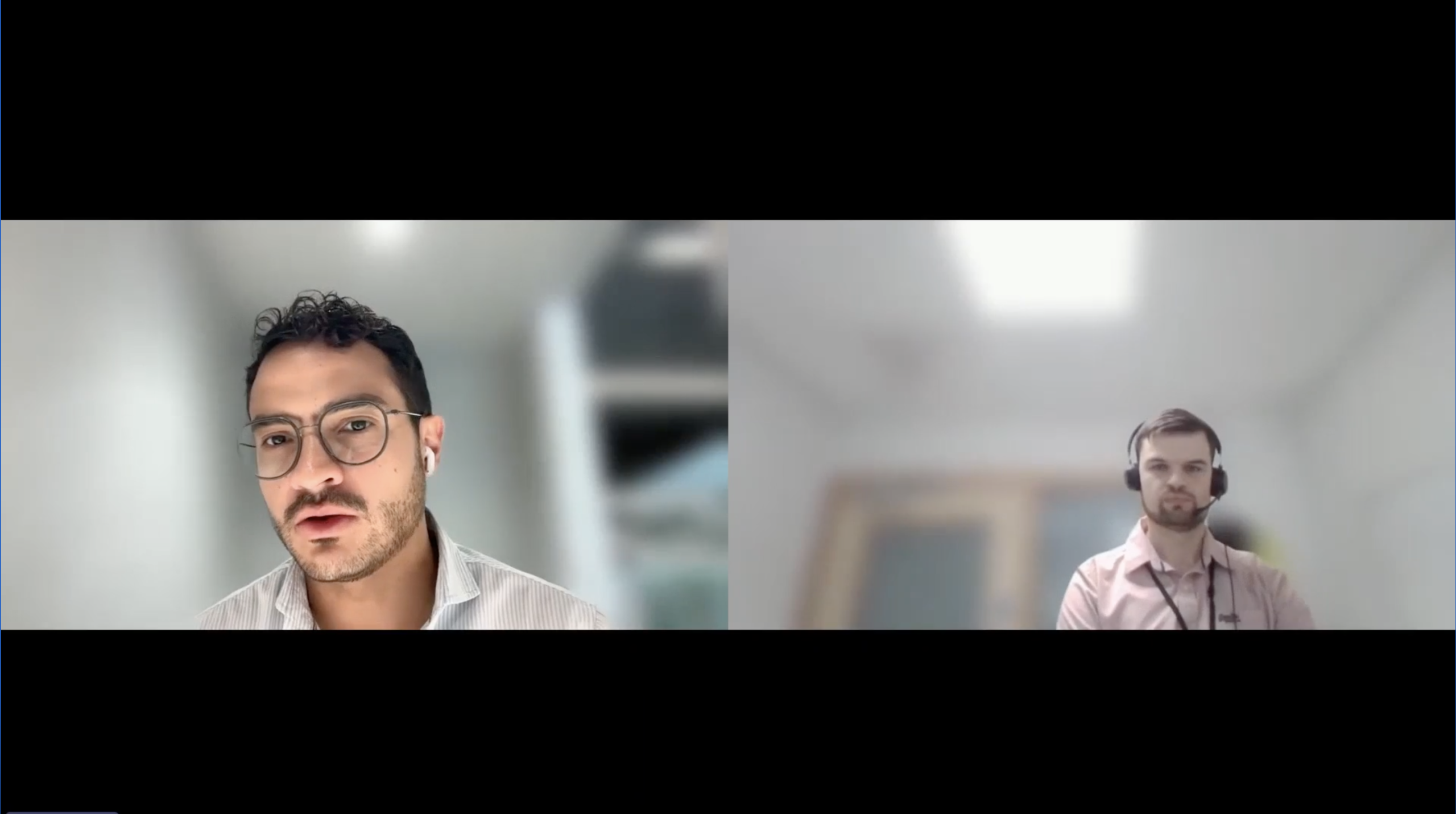
Denis White explains how one of Ireland's largest dairy cooperatives is building a credible path to net zero across 1,200 farms.
In this interview, Denis White (ESG Reporting Lead at Carbery Group) shares how Carbery is structuring its sustainability programme, from site-level energy monitoring to Scope 3 engagement with West Cork farmers. In conversation with Alejandro Vergara (CEO of ODOS), he explains how Carbery aligns its work with the Science Based Targets initiative (SBTi), prepares for the Corporate Sustainability Reporting Directive (CSRD), and translates farm-level action into measurable emissions reductions.
Carbery Group is owned by four West Cork co-operatives and supplied by around 1,200 dairy farmers. Its ambition is clear: net zero across all operational facilities by 2035.
How does Carbery monitor energy and emissions across Its operations?
Carbery’s reporting starts at the site. Each facility owns its energy, water, and waste data, which is consolidated up to Denis and Enda Buckley, Director of Sustainability. From there, emissions are split into Scope 1 and Scope 2, with every site assigned an individual reduction target that rolls up into the group’s overall SBTi pathway from a 2020 baseline.
“Each site has an individual target, which all consolidates up into the group’s overall emissions reductions target,” Denis explains.
Beyond absolute emissions, Carbery monitors intensity metrics, looking at how much energy and how many tonnes of CO₂ equivalent are generated per tonne of output. Comparing these metrics across sites and over time helps the group identify which facilities are most efficient and where decarbonisation investment is most needed. That data then drives conversations around projects like solar PV to offset electricity demand at the highest-emitting sites.
Why did Carbery develop the Futureproof Programme?
Scope 3 sits largely outside any company’s operational control, but Carbery has an unusual advantage: most of its supply base is on its doorstep in West Cork. More than 70 percent of the group’s farm emissions originate from this catchment, which made it the natural place to design a structured engagement programme with suppliers.
The result is Futureproof, the sustainability bonus paid to suppliers who adopt specific on-farm practices. Each measure is chosen because it can be monitored with robust data and because its impact on the emissions profile is verifiable, not because it is easy. Tackling on-farm emissions remains one of the most complex parts of the dairy value chain, and Futureproof was built to give farmers a clear, financially supported route to participate.
“Suppliers are paid an additional amount for achieving sustainability targets,” Denis says. The programme launched with four measures and now includes a fifth covering liming. Protected urea has been in place since 2023, and working with ODOS Tech on Life Cycle Assessments, Carbery quantifies the emissions saved per tonne of protected urea spread compared with conventional nitrogen fertilisers such as CAN.
Futureproof is co-owned by Carbery and the four West Cork co-operatives, which gives the group direct visibility on the metrics and a clear line of sight on the impact, something rarely achievable in other parts of the Scope 3 inventory such as transport or downstream processing.
What is Farm Zero C and how does It shape scope 3 action?
Behind Futureproof sits a longer-term research engine. Farm Zero C is a flagship project led by Carbery with the ambition of becoming the first climate-neutral commercial dairy farm at scale globally. Conceived by Enda Buckley, the project tests practical interventions to reduce emissions, improve water quality, and build soil health.
When a measure trialled at Farm Zero C proves both effective and financially feasible at farm level, it can be rolled into the Futureproof bonus across West Cork. In Denis’s words, the model creates a clear pipeline: research informs action, action gets incentivised, and incentivised practices generate measurable reductions in the group’s Scope 3 footprint.
How does Carbery align its reporting with SBTi and the GHG protocol?
Carbery has been tracking its performance long before SBTi alignment became standard practice. “We’ve always been looking to the future and how we can future-proof the business,” Denis says.
The group reports against the GHG Protocol across Scope 1, 2, and 3, which remains the most widely recognised standard for corporate greenhouse gas accounting. Internally, automated workflows consolidate sustainability data into a centralised enterprise data warehouse, making reporting more consistent and auditable.
Scope 3 brought a different challenge. With emissions data spread across the value chain, Carbery worked with ODOS Tech to design a process that maps data requirements across the 15 GHG Protocol categories and aligns the output with CSRD and customer-driven reporting needs.
How is Carbery preparing for CSRD?
CSRD will require Carbery to report from 2027. As an Irish-headquartered group, the entire organisation will fall in scope, including sites outside the EU where local sustainability regulation is less developed.
Denis is clear that compliance is not the only driver. “We would have been capturing and reporting this data anyway,” he says. “The whole reason for us is future-proofing the business and finding efficiencies and cost savings where we can.”
The next ambition is frequency. Today, Scope 3 is consolidated annually. The goal is to move to quarterly and eventually monthly reporting, putting sustainability data alongside financial data in the leadership cadence.
What are the biggest challenges in sustainability data collection?
The hardest part is rarely the calculation, it is the data foundation underneath it. As Carbery grows, the volume and complexity of inputs grow with it. Different sites operate different systems, and harmonising data across the group requires consistent definitions, units, and processes.
The response has been investment in infrastructure: standardising data inputs, working closely with the IT team to centralise information into one enterprise data warehouse, and building automated flows that feed directly into the emissions calculations.
“There’s an awful lot of work ongoing,” Denis notes. “We need to ensure the data continues to flow into our processes, and that we keep building.” For Carbery, sustainability reporting is no longer a year-end exercise. It is becoming a continuous operating capability, grounded in farmer engagement, verified through projects like Farm Zero C, and scaled through partnerships with technology providers like ODOS Tech.